Occupational therapy parent coaching: what it is, and what the research says
Sep 15, 2026
It is half past five. You have been thinking about dinner since three o'clock, not because you are hungry, but because you already know how the next twenty minutes are likely to go. You have read the articles. You have tried the visual schedule and the countdown timer and the calm voice. Some nights it works. Most nights it does not, and you are left wondering what everyone else seems to know that you do not.
If that is familiar, I want to tell you about a way of working that does not start with your child at all. It starts with you, and with the twenty minutes you are actually living in.
What parent coaching actually is
Most people picture occupational therapy for children as a therapist and a child in a room together, working on something, while the parent waits outside or watches from a chair. Parent coaching moves the work somewhere else. Instead of the therapist spending an hour a week with your child, the therapist spends that hour with you, building your understanding of what is happening and your confidence to respond to it inside the routines that are already part of your day.
This matters because your child's life is not happening in a therapy room. It is happening at the dinner table, in the car line, in the bath, at the birthday party you are not sure you will make it through. Those are the moments where change is needed, and you are the person who is there for all of them.
Coaching is not the same as being handed a home program. It is not a lecture, and it is not advice giving. It is a partnership, where I bring what I know about children's development, sensory processing and regulation, and you bring what you know about your child, your family and what is genuinely possible in your week. The strategies that come out of that conversation belong to you, because you helped build them.
Where the approach comes from
The framework underneath this work is called Occupational Performance Coaching, developed by Dr Fiona Graham with Professor Sylvia Rodger and Professor Jenny Ziviani, originally through research at the University of Queensland. It is occupational therapy specific, it has a published practitioner manual, and it has been studied across several countries.
It is built on three things happening at once.
The first is connection. Before anything else, coaching depends on a relationship where you feel genuinely listened to and not judged. This is not a warm up before the real work starts. Researchers describe it as one of the active ingredients, and parents in these studies consistently name it as what made the difference.
The second is structure. Coaching holds a clear problem solving shape, so you do not have to carry it. Together we name a goal, look closely at what is happening now, explore the options, plan one specific thing to try, and then come back and look at how it went.
The third is sharing, and this one surprises people. A coaching conversation deliberately draws out what you already know before I offer what I know. Parents almost always have more information about their child than they give themselves credit for, and the research suggests that being treated as the expert on your own child is part of why the approach works, not just a nice feature of it.
At the centre of it is a simple set of questions that we return to again and again. What happens now? What would you like to happen instead? What is getting in the way, and what is already helping? And what do you need in order to take the next step?
What the research tells us
I want to be careful here, because I think you deserve the honest version rather than the marketing one.
Coaching approaches sit well in the evidence. In the major systematic review of interventions for children with cerebral palsy by Novak and colleagues, published in 2020, coaching, goal directed training and parent education all sit in the strongest evidence category. An Australian systematic review of paediatric occupational therapy by Novak and Honan in 2019 reached similar conclusions about goal based approaches delivered with families.
For Occupational Performance Coaching specifically, Graham, Rodger and Ziviani published a study in the American Journal of Occupational Therapy in 2013 showing significant improvement in both children's and mothers' occupational performance, with a large effect that was still present at follow up six weeks later. Several randomised controlled trials have followed, and a 2024 systematic review of seven studies reported improvements in children's occupational performance alongside improvements in parents' self efficacy, emotional wellbeing and quality of life.
There is also research closer to the sensory and regulation questions I am most often asked about. A 2021 scoping review by Allen, Knott, Branson and Lane looked at coaching parents of children with sensory integration difficulties. Parents in those studies showed increases in their knowledge of sensory processing and in their confidence, alongside reductions in parenting distress. One finding I find quietly telling is that attendance across those studies ran between 89 and 100 per cent, noticeably higher than is typical for parent training programs. Parents stayed. That tells you something about what it feels like to be in the room.
What the research does not yet tell us is just as worth saying. Many of these studies are small. Most involved autistic children and their mothers, so we know less about other families. Follow up periods are often short. One recent trial found coaching worked about as well as another good family centred approach rather than better than it. This is a promising body of evidence, not a finished one, and no approach can promise a particular result for a particular child.
What a coaching block looks like
I work in blocks of six sessions, which sits inside the range used across the research, and everything is delivered by video call.
The first session is about you and your goals. We talk about what is hard, what is already working, and what a good week would actually look like in your house. By the end of it we have two or three goals in your words, describing something real, like getting out the door on a kindy morning without everyone arriving upset, rather than something abstract about skills.
The four sessions in the middle follow the same rhythm. We start with how the last plan went and what you noticed. We look closely at whatever is sticking. We generate options together, and we land on one specific, small thing for you to try before we next meet. If you are not reasonably confident you can do it, the plan is too big and we make it smaller.
The final session is about handing it over on purpose. We look back at your goals, and we talk about how the thinking transfers to the next hard thing, because there will be a next hard thing, and the point of coaching is that you are equipped for it without me.
Sessions run for around an hour, usually fortnightly, though we can shape that around your life. Doing this by video is a deliberate choice rather than a compromise. It means no waiting room, no car park, no getting your child out of the house, and you can do it from your kitchen. The research on telehealth coaching is encouraging, with outcomes comparable to in person delivery and, in at least one study, more families staying the course.
Who this tends to suit
Parent coaching tends to suit families who want to understand the why underneath what they are seeing, not just be handed a list of strategies. It suits parents of young children, roughly two to eight, though not exclusively. It suits families in the long middle of waiting, because coaching does not require a diagnosis or a funding package to begin. In Australia the average time between a parent's first concern about autism and an actual diagnosis is more than two years, and that is a very long time to sit still.
It will not suit everyone, and if what your family needs is direct hands on therapy with your child, an assessment, or a different profession altogether, I will tell you that and help you work out where to go instead.
Working together
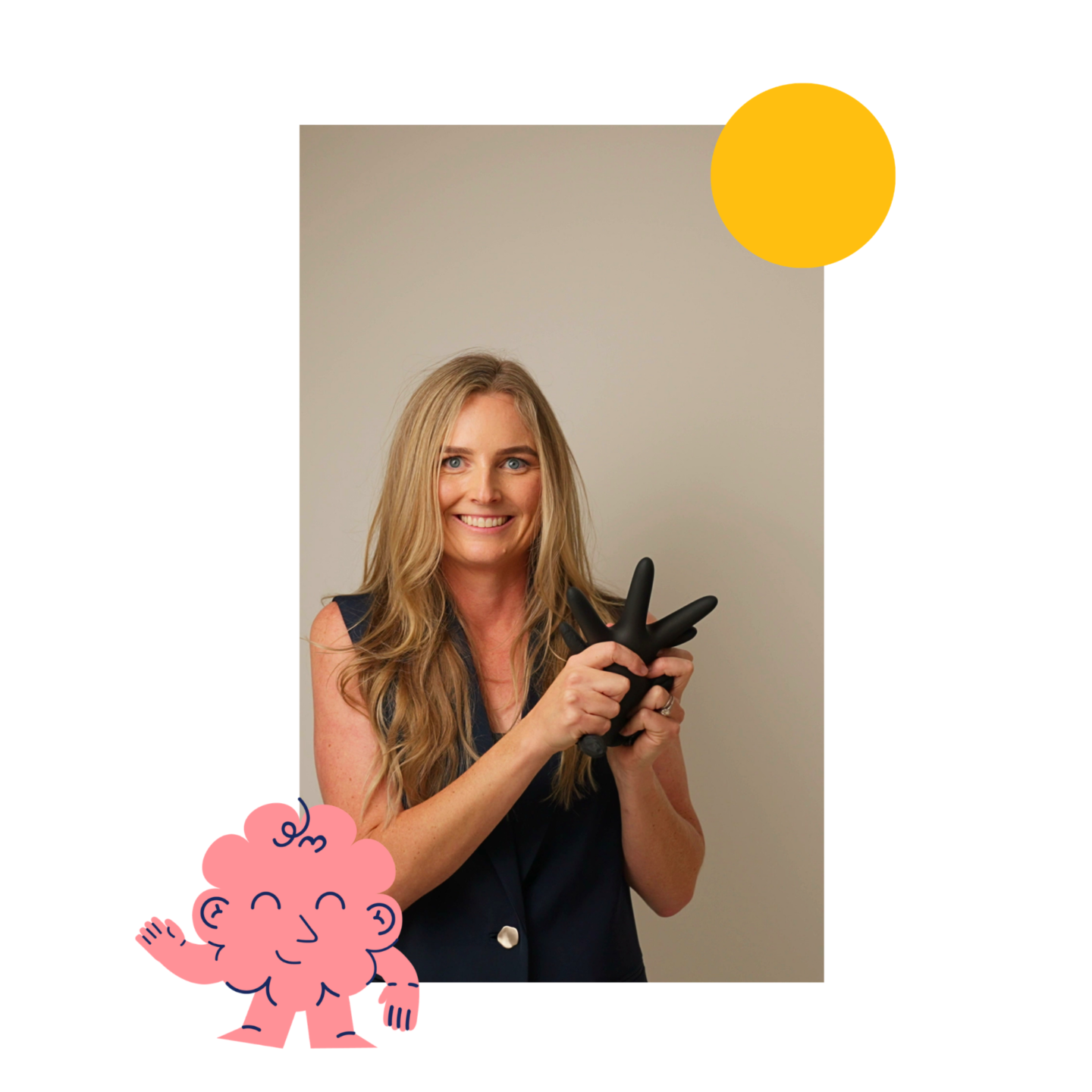
I am opening one day a week for parent coaching. I am an occupational therapist with seventeen years of experience in early childhood, most of it inside early learning services, and I am the founder of Regulation Rituals®.
Coaching is available as a private fee service, and can also be funded through NDIS plans that are self managed or plan managed, or through a Medicare chronic disease management plan with a referral from your GP. Places are opening by waitlist at the moment. You can read exactly how it works, step by step, and add your family to the waitlist on the Occupational Therapy Parent Coaching page. Joining does not commit you to anything, and if you are not sure whether it is the right fit, you are welcome to email me and ask.
That twenty minutes before dinner will probably still be the hardest part of your day for a while yet. But it is possible to walk into it understanding what your child's body is asking for, with a plan you believe in, and without the feeling that you are the only one who has not worked it out. That is really what coaching is for.
Get the Insider
Free, practical writing for early childhood educators. Straight to your inbox.
No spam, ever. Unsubscribe in one click, any time.