Why self-care is part of your practice, not a reward for finishing the day
Aug 28, 2026
It is just after four. The room has emptied, the last family has gone, and you are still here finishing the documentation you did not get to because you were covering a gap over lunch. You will probably do the same thing tomorrow. Somewhere in the back of your mind sits a loose plan to look after yourself properly once things settle down. Things have not settled down for a while now.
I want to offer something that can sit uncomfortably at first. Looking after yourself is not the reward you collect once the work is done. It is part of the work.
What the numbers actually show
It helps to see the shape of this clearly, because it is easy to assume the pressure you feel is particular to you or to your service. It is not. Australia's most recent Early Childhood Education and Care National Workforce Census counted a workforce of roughly 240,000 to 268,000 people across approved services and dedicated preschools, and the working patterns inside that number are striking. Only 29.3 per cent reported full-time hours. Another 36.8 per cent were in long part-time work, 30.8 per cent in short part-time, and 3.2 per cent were working beyond forty hours a week. Educators in Family Day Care and In-Home Care were far more likely to sit in that last group.
Alongside this, services themselves name workforce shortages as a key reason they cannot open all the places they are licensed for. So the fragmented rosters, the split shifts, the days you run light: these are sector conditions, not personal failings.
The hours the clock does not record
The contracted hours are only part of the picture. A national study from the University of Sydney found that educators spend less than 30 per cent of their day in uninterrupted interaction with children, and average close to seven hours of unpaid work every week. Administrative and compliance tasks were drawing them away from the children they came to be with.
Front-line experience matches the data. National snapshots from the United Workers Union, reported by the ABC, describe widespread under-staffing and turnover, with many services running below minimum staffing at least weekly and a significant minority doing so daily.
Reading those figures, I suspect nothing surprises you. You already knew it in your body. What the research offers is language for it, and permission to name it out loud rather than quietly absorbing it.
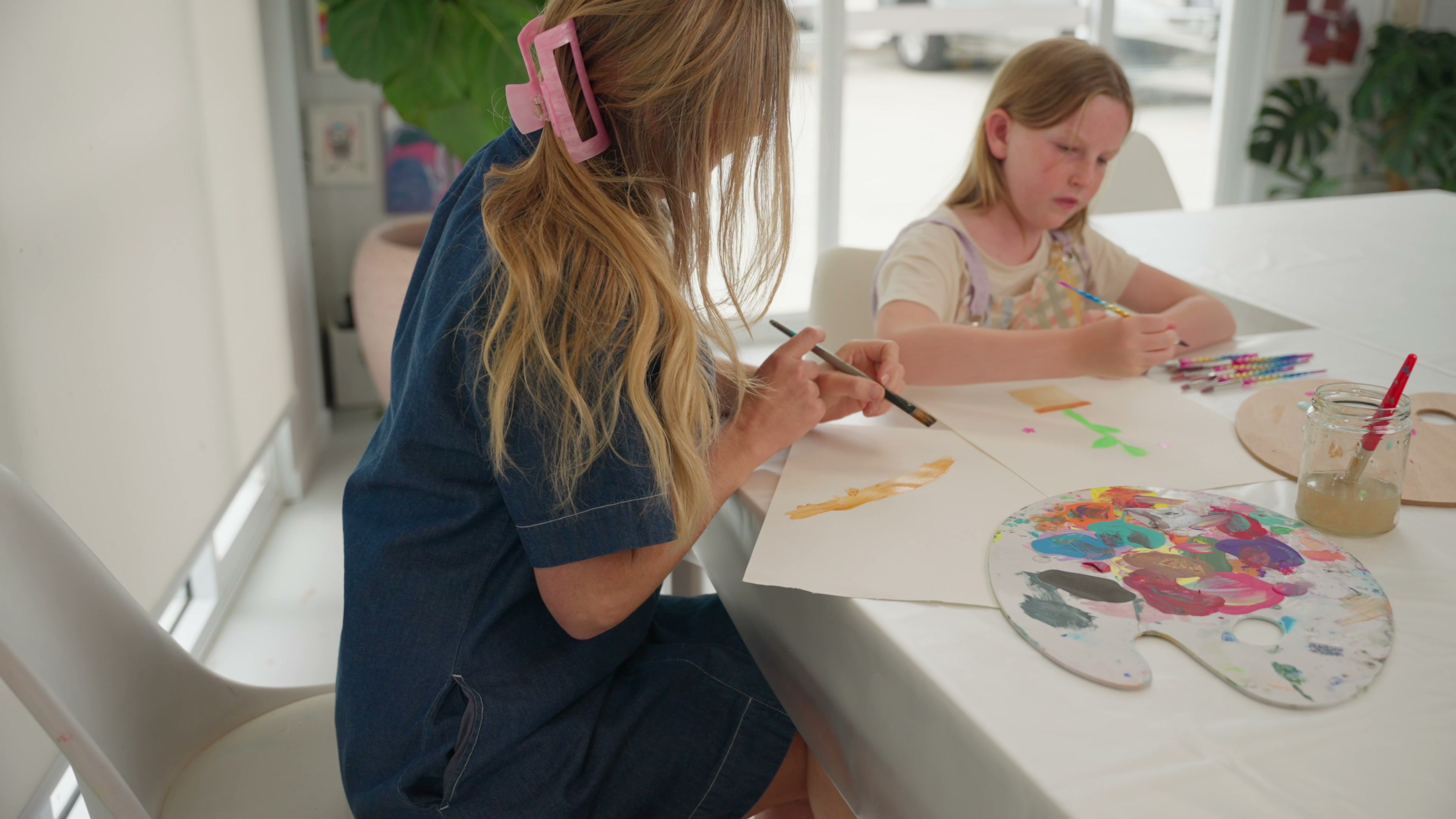
The state you are in is the scaffold children are standing on.
Why your regulation comes first
Here is the part I most want educators to hear. Regulation is contagious. The adult nervous system sets the emotional climate that children borrow from, which means the state you are in is not a private matter. It is the scaffold children are standing on.
When you are chronically over-extended, your baseline arousal drifts upward and your recovery windows shrink. It shows up in micro-moments rather than dramatic ones: a slightly shorter fuse in transitions, less curiosity when two children are in conflict, a harder time finding the playful tone that usually diffuses things. The co-regulation children rely on becomes harder to offer consistently, not because you care less, but because there is less of you left to offer it with.
Framed this way, self-care stops being self-indulgent. It becomes the first step of child-centred practice.
What this can look like on an ordinary Tuesday
The practices that hold up under real conditions are small and repeatable, because macro-recovery is often out of reach. Look for two or three predictable micro-breaks you can anchor inside the day: three slow breaths before group time, a minute of grounded standing between room changes, five minutes outside with no task attached during a non-contact window. Frequent small recovery supports your capacity to re-enter co-regulation sooner than one long break at the end of a depleted day.
Documentation deserves an honest look too, and this one belongs to the team rather than the individual. Given the evidence that administrative load is pulling educators away from children and generating unpaid hours, it is worth separating what compliance genuinely requires from what has simply become habit. Batching documentation into planned non-contact time, rather than after hours, is a leadership decision more than a personal discipline problem.
Then there is the culture around all of it. Deciding together what happens with after-hours messages, how breaks get covered, and how you handle below-ratio pressure safely turns self-care into team care. When it is normal to say "I am at my limit, who can trade tasks with me", the weight stops landing on whichever person happens to be most regulated that morning.
Your own sensory needs are worth the same thought you give the children's. If the room has been loud and bright, a brief quiet ritual before your next interaction is not indulgent. If documentation has left you flat, two minutes of movement before you return to the floor is not wasted time. Adults have sensory systems too, and they respond to the same care we design so carefully for children.
This is not yours alone to carry
I want to be careful here, because there is a version of this conversation that quietly hands educators one more thing to be responsible for. That is not what I am doing.
ACECQA's most recent annual report notes continuing adjustments to qualification pathways in recognition of these shortages, which tells you the pressure is understood at a system level. Research from the Black Dog Institute, focused on schools but recognisable to anyone in early childhood, captures the same pattern of elevated stress and intent to leave across the education professions.
Educator wellbeing is a system-level issue. Micro-breaks will not fix understaffing, and no breathing exercise compensates for seven unpaid hours a week. What the small practices can do is protect your capacity while the bigger conversations continue, and make it more possible to stay in work you care about.
Something to sit with
If you take one thing from this, let it be a question rather than a task. Where in your day do you predictably lose your regulation, and what one-minute ritual could you place just before that moment?
Back to four o'clock, and the documentation, and the plan to look after yourself once things settle down. I would gently suggest that things are not going to settle down on their own, and that waiting for them to is the part worth letting go of. The children in your room are not waiting for a more rested version of you at some point in the future. They are borrowing from the one who is there today.
If you would like to go deeper into how regulation works for both the adults and the children in your setting, that is the heart of what I teach inside Regulation Rituals®, The Early Childhood Method.
Get the Insider
Free, practical writing for early childhood educators. Straight to your inbox.
No spam, ever. Unsubscribe in one click, any time.